
For Autistic and otherwise neurodivergent people, life often feels like an endless demand to leap; from one task to another, from one conversation to the next, from one state of being into another that feels jarringly alien. And yet, life itself is nothing but transitions. Every breath is a transition. Every thought, every heartbeat, every flicker of attention marks a shift from one moment into the next. For monotropic minds, minds that sink deeply into one stream of focus at a time, those transitions are seismic.
The world rarely recognises this. In systems designed for polytropic minds, people expect us to switch seamlessly,
to drop what we’re doing and just move on, but for many of us, those leaps are violent ruptures. They tear us from our flow,
from the deep well of attention that anchors us, and leave us fragmented. This is where Autistic burnout lives in in monotropic split the relentless tearing of our attentional fabric, one that ultimately leads to burnout. Burnout is a collapse. A crisis of connection that leaves us unable to find our flow, unable to belong, unable to move without pain.
What is Lilipadding?
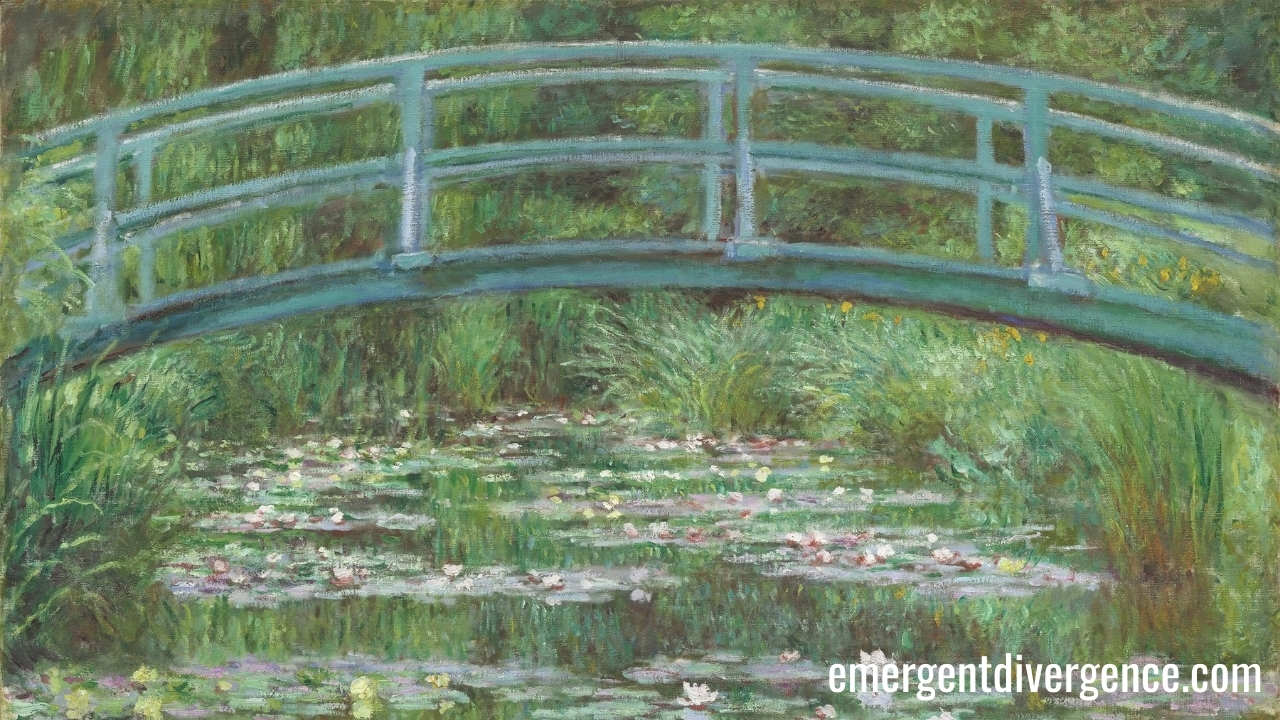
Lilipadding is not a strategy, and it is not another compliance tool to squeeze productivity from a burnt out person. It is a relational philosophy of attunement, consent, and pacing. Rather than forcing abrupt leaps, lilipadding creates stepping stones. We move gradually, through associative tasks, sensory anchors, or relational supports that connect where we are to where we’re going. Like a frog crossing a pond, we hop, pad by pad, across familiar ground.
Lilipadding honours monotropic processing and maintains a flow state through the embracing of associative thinking and natural bridges from one lilipad to the other. It asks us not to leap over the pond, but to make use of it on our journey. Lilipadding provides a framework for autonomy rather the prescribed and scripted methods and pathways to get to the point that another has imposed.
Lilipadding as the Practice of Living
We have spoken about lilipadding in terms of task transitions. But life itself is made of transitions.
Every breath is a bridge. Every thought is a shift. Every second holds a microtransition.
Lilipadding is about being mindful of where you are, feeling safety in the moment, and knowing what lilipads are available to you next. It is about seeing a path through the chaos without losing your self-regulation. It is honouring your own way of being, moving at your own pace, and not internalising the pressure from outside forces to move along your path faster. It is the abject rejection of shame and neuronormativity.
For monotropic minds, recognising this truth is radical. It means we can reframe lilipadding not just as a tool for managing
tasks but as a philosophy of self-compassion and self-acceptance.
Lilipadding becomes:
- Breath to breath: staying with the rhythm of inhalation and exhalation as a bridge into calm.
- Thought to thought: allowing one idea to taper gently before inviting in another.
- Moment to moment: treating every shift of state; sensory, emotional, attentional, as a transition worth honouring.
Conclusion: Between Breaths
Lilipadding invites us to create our own world, one that works for us. Through intentional practice of this philosophy we create islands of safety from which we can move through the world in a way that honours our human experience. It is not about knowing how to move from task to task, rather about creating the felt safety and mindful awareness that allows us to design our path and move across it while resisting the ableism and neuronormativity that would have us be ashamed of our neurocognitive style.

